













































CLICK HERE TO READ THIS ARTICLE IN SPANISH
San Diego (California).- The United States Postal Service (USPS) has released a new series of commemorative stamps honoring lowriders, the customized cars deeply rooted in Mexican American and Chicano communities across the American Southwest.
The first-day-of-issue ceremony took place at the Logan Heights Library in San Diego, a community closely connected to the history of lowrider culture. With this release, USPS aims to recognize the artistic creativity and cultural significance of these iconic vehicles.
Gary Barksdale, the Postal Service’s chief postal inspector, served as the dedicating official at the ceremony and described lowriders as moving works of art.
“A lowrider is a masterpiece of engineering and artistry — a rolling canvas,” Barksdale said. “They often feature murals that tell stories of family, faith and history. Lowrider culture creates a space to celebrate pride, belonging and community.”
The new stamps bring that tradition to millions of Americans through everyday mail.
What is a lowrider?
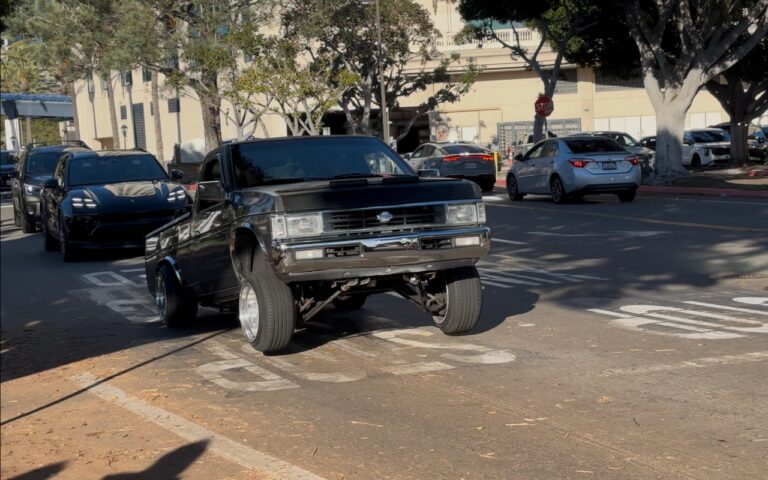
A lowrider is a customized car designed to sit lower than standard vehicles. Owners achieve this by modifying the suspension and often installing smaller wheels than the factory originals.
But the culture is about much more than the car’s height.
Lowriders commonly feature:
- elaborate custom paint and murals
- velvet interiors or other decorative upholstery
- unique steering wheels, sometimes made from welded chains
- hydraulic systems that raise and lower the car
These hydraulics allow drivers to perform tricks such as driving on three wheels or “hopping,” where the car bounces off the ground.
Each vehicle reflects the owner’s imagination, craftsmanship and dedication, transforming classic American cars into unique rolling works of art.
How did lowrider culture begin?
Lowriding became widely popular in the 1970s, but its roots trace back to the 1940s in East Los Angeles and the Southwest borderlands.
During that era, many young Chicano men experienced discrimination and used fashion, music and cars to express identity and pride.
Inspired in part by African American jazz culture, some adopted the style of the “Pachucos,” wearing zoot suits, two-tone shoes and wide-brimmed hats.
At the same time, some began lowering the chassis of their cars — creating what would become the first lowriders.
Why did lowriders become a cultural symbol?
During the Chicano Movement of the 1960s, lowriders became a visible symbol of identity, pride and resistance.
For many owners, the car represented a personal statement of dignity and presence.
Car clubs also began to flourish. Members proudly displayed club plaques in the rear windows of their vehicles.
Although early clubs were mostly male, women formed their own clubs in the late 1970s, expanding participation and influence within the culture.
Today, lowriding is often a family tradition, with multiple generations participating in car shows, parades and community events.
Many clubs also organize fundraisers and charity events, using their vehicles to support local causes.
How far has lowrider culture spread?
While it began in Mexican American communities in the Southwest, lowrider culture has spread globally.
Lowrider clubs now exist in Japan and many other countries, where enthusiasts embrace the style and tradition.
The cultural significance has also been recognized by major institutions. The Smithsonian’s National Museum of American History features a lowrider model as part of its exhibits.
This recognition highlights how a grassroots cultural movement evolved into an important part of American cultural history.
What do the new stamps feature?
The stamp collection includes five vehicles photographed by Philip Gordon and Humberto “Beto” Mendoza.
Featured cars include:
- “Let the Good Times Roll/Soy Como Soy” — 1946 Chevrolet Fleetline
- “Pocket Change” — 1987 Oldsmobile Cutlass Supreme
- “Eight Figures” — 1958 Chevrolet Impala
- “The Golden Rose” — 1964 Chevrolet Impala
- “El Rey” — 1963 Chevrolet Impala
USPS art director Antonio Alcalá chose photography instead of illustration to accurately represent the craftsmanship behind each car.
To showcase the vehicles’ details, the stamps are one-third wider than standard commemorative stamps.
The design also includes elements inspired by lowrider culture, including Gothic-style lettering and custom pinstriping by artist Danny Alvarado.
Where can the stamps be purchased?
The stamps are sold in panes of 15 and are issued as Forever stamps, meaning they will always equal the current price of a one-ounce First-Class Mail stamp.
They are available at post office locations nationwide and online at usps.com/shopstamps.
For collectors and enthusiasts alike, the release represents a national recognition of a cultural tradition that has shaped communities and influenced automotive art for generations.